frame-material
Teak Wood
Solid teak, prized for its natural oils and weather resistance. Silvers to grey if you let it, stays honey if you seal it.

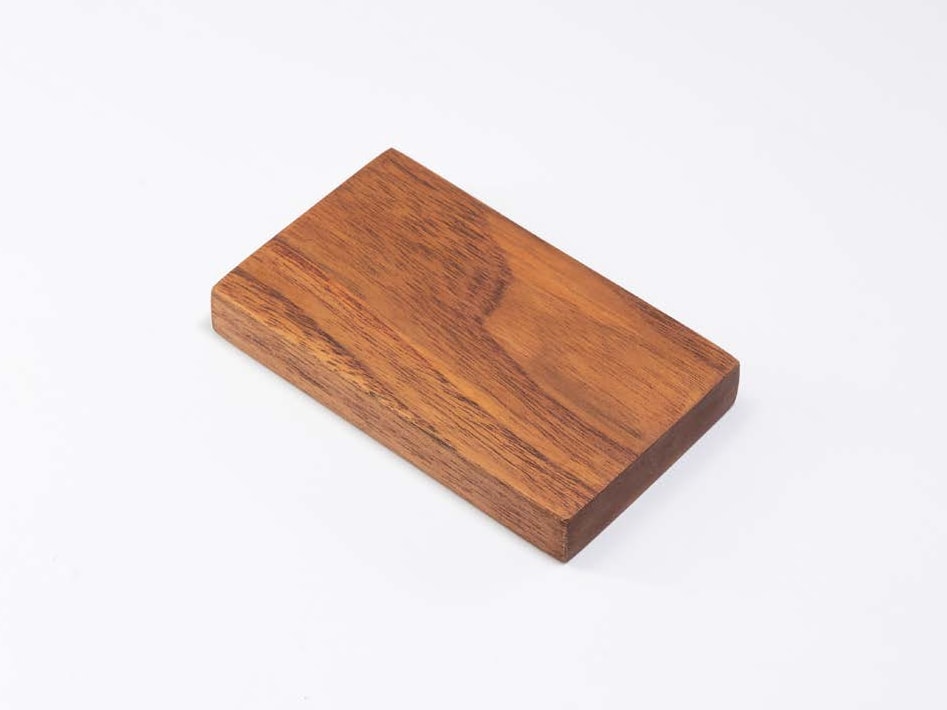
Teak earns its reputation from its own chemistry rather than from anything done to it. The natural oils and silica in the timber resist water, insects and rot with no treatment at all — which is why teak has been the timber of ship decks for three centuries and why a teak frame left outdoors is still sound decades later. Ritzlane offers it two ways, and they are a decision about appearance rather than durability. Natural Teak shows the grain of the solid timber and is left to do what teak does: ultraviolet light breaks down lignin in the top fraction of a millimetre and the surface turns a silver-grey patina, at a rate that depends on your climate and how much sun the piece actually gets. Sealed Natural Teak carries a protective coating and keeps its original honey tone, and must be re-sealed annually to stay that way. Neither is better; a silvered teak frame is not a neglected one. Two things are worth knowing before you choose. Each piece varies slightly in colour and grain, because that is what solid timber is. And teak expands and contracts with the seasons, which can open small surface cracks — they are cosmetic and do not affect the strength of the furniture.
Specification
| Species | Teak |
|---|---|
| Natural oil content | High — no treatment required |
| Weathering behaviour | Develops a silver-grey patina; rate depends on climate and exposure |
| Grain | Varies piece to piece — a characteristic of solid timber |
| Presentations | Natural Teak · Sealed Natural Teak |
Care
Wash with mild soap and water twice a year. Sealed Natural Teak must be re-sealed annually to keep its original finish; left untreated it will silver. Prefer a sealer to a teak oil — oil can feed surface mould in a humid climate, and teak does not need feeding.
Common questions
Does teak outdoor furniture need to be oiled?
No. Teak contains enough natural oil to protect itself outdoors indefinitely, and oiling is purely a decision about colour. Applying teak oil can actually encourage mildew in a humid climate, because the oil feeds surface mould. If you want to keep the honey tone, use a sealer once a year rather than an oil.
Why does teak turn grey outdoors, and is that a problem?
Ultraviolet light breaks down lignin in the top 0.1 mm of the surface, leaving a silver-grey layer. It is cosmetic, not structural: the timber underneath is unchanged and the furniture is no weaker for it. A light sand returns the original colour at any point.
Are small cracks in teak furniture a defect?
No. Teak expands and contracts with changes in humidity and temperature, and that movement can open fine surface checks, particularly at the end grain. They open and close with the seasons and do not affect the strength of the piece. A crack that runs through a joint is a different matter and should be reported.